Showing posts with label Teaching. Show all posts

Saturday, January 10, 2026

WINTER ACTIVITIES FOR ALL OF US


I'm going to give you some info about events I, my spouse R. Sikoryak (a.k.a Bob) , and you (potentially) could engage in. Here we go!


Just for fun, here's my headshot which I think also emphasizes my skills at graphic medicine as a panel member and anatomy instructor.  The skeletal hand also hints at my work with my Cadaver Chronicles. Plus, I'll be teaching a drawing anatomy workshops in NYC in January, and February of 2026. 


SKETCHING ANATOMY IN JANUARY

My spouse Bob, and I will be teaching a series of anatomy drawing workshops at the Society of Illustrators in January 2026. It's called Anatomy For Illustrators Workshop. Here's a view of the info on their website. I'm drawing bones and muscles on one of my drawing models Wendy Chu.

Want to shop for some of my Cadaver Chronicles minicomics? They are now being sold online through Radiator Comics


If you want to shop for comics this year, have a good time!


Sunday, July 7, 2019

GRAPHIC MEDICINE AT THE NYU SCHOOL OF MEDICINE

The cover of the mini comic.
How many organs/structures can you identify?

Last fall (2018) I taught a Graphic Medicine course for the NYU School of Medicine's Master Scholars Program in Humanistic Medicine. It was a wonderful experience. I got paid to talk about comics to medical students and hospital staff! 

We read as many genres and artists as I could cram in to a six seminar series. Julia Wertz, Roz Chast, Grant Morrison, Caroline Pequita, Osama Tezuka, Bishakh Som, Iasmin Oma Ata, and oh-so-many-more cartoonists gave us plenty to consider and discuss.

We analyzed the  medical clinical encounter from the perspectives of patients, doctors, caregivers, and more. We explored issues like paternalism, miscommunication in medicine, professional burn out, gender identity, women's health... the list goes on. 

At the end of each class EVERYONE drew. It was fascinating to watch these talented doctors, students, researchers, and nurses, ponder my in-class assignments and create lively, funny, and touching comics in literally minutes!

We drew symptoms, wrote comic strips about personal clinical and academic encounters, designed cute organ mascots, and illustrated popular sayings about health and medicine. "Cute" is not an aesthetic that is usually explored in medical contexts. Illustrating and making (even silly) comics about medicine is a really interesting method for appreciating multiple pathways of communication. Plus it breaks up the intensity of creating uncomfortable narratives.

At the end of the course, we assembled the work into a mini comic. You can see some examples on the Lit Med Magazine site and check out their literature, arts, and medicine database.


Monday, May 30, 2016

VISIT MY GUEST BLOG POST

An image from Salvage's Anatomie du Gladiator in the NYAM collection.
VISIT THIS BLOG TO VISIT THAT BLOG
Yes, it's a little ridiculous, but this blog post is here only to send you to my latest blog post for the New York Academy of Medicine's Books, Health, and History blog. Many Anatomy Lessons at the New York Academy of Medicine is my second blog post for NYAM. 

Interested in taking my Visualizing and Drawing Anatomy classes at NYAM? Classes start June 6 so there's still time to sign up!

Thursday, March 24, 2016

MINI COMICS, THE BODY, HEALTH, AND MEDICINE

SHOWING AND TELLING

Last night I took the subway uptown with a grocery bag full of mini comics to show and discuss with a monthly Graphic Medicine Workshop that I attend regularly. 

The Workshop is facilitated by Pat Stanely and Marsha Hurst, both of the Columbia University Narrative Medicine program. Typically we read a graphic novel or memoir in the realm of graphic medicine, and when we meet, have a conversation somewhere between a close reading, an analysis of writing and/or drawing, and a discussion of anything else that might catch someone's eye. 

The group varies, but attendees are often faculty teaching narrative medicine; students and graduates of the program; writers; people with social work or other healthcare backgrounds; and/or cartoonists. The groups is as interesting as the books we discuss. I learn at least 3 new things every time I go.


This month, as a change of pace, I brought my medical/bio/health- themed mini comic collection for the group to look over. Graphic novels are a rich resource, but minis offer an incredible range of topics and insights, too!

The authors of the minis included Emi Gennis, David Lasky, Whit Taylor, Box Brown, Mindy Indy,  Georgia Webber, Kate Lacour, Anuj Shrestha, Liesl and John G. Swogger, Shing Yin Khor, Joyana Mc Diarmid, Andy Warner, Sarah Mink and Corinne Mucha, Claire Sanders, Cathy Leamy, and many more...!

I think minis can be underrated as dynamic teaching tools. My collection ranges in topics from mental health to cancer diagnosis to genital mutilation to science fiction. They are memoir, instructional, fiction, and journalism  or manifesto. Most of them are not for children. 

Many minis in my collection weren't drawn with education or bio/health/medicine readers as a target market. They just happen to fall into that category. ANY topic you can imagine is likely addressed in a mini comic. They're (usually) cheaper than comic books or graphic novels, the art and writing are comparable, and are an excellent way to target an individual short story rather than wading through an anthology for the work of one particular cartoonist. 

Minis often are self-published and don't go through an editorial process. If you are interested in public perceptions of science, health, and the body, minis will give you a more diverse sample than graphic novels. Some of them are very opinionated (to put it mildly!)

Wednesday, October 22, 2014

NOTES FROM VESALIUS 500 - Part 1

MISSED IT THIS YEAR? GO NEXT YEAR!

The New York Academy of Medicine Center for History is an institution that everyone should get to know. One way to do that is to go to their annual open house events. This year's event was on October 18. Guest curated by artist Riva Lehrer, this day of history, medicine, pathology, anatomy, and loads of fun (yes, fun!) was entitled Vesalius 500. 2015 marks the 500th anniversary of the birth of Andreas Vesalius who rocked the world in 1543 with the publication of his seminal book on human anatomy. In 449 more years I want a birthday party like NYAM's celebration of Vesalius!

MY PART - VISUALIZING ANATOMY
Tyner and I demonstrate the position and action of sternocleidomastoid.
(Photos by R. Sikoryak. A little blurry but he was videotaping at the same time.)

With the help of my model Tyner Dumortier, I talked about and drew muscles of the body that rotate the torso and/or move the arms in diagonal pattern. The "route" that we took around Tyner's torso was inspired by one of the plates from Vesalius' De humani corporis fabrica libri septem.
Here's a close up of Vesalius' inspirational plate.
I'm particularly attracted to the relationships of splenius capitis and the rhomboids.

I used bony attachments to create a "chain" of muscles that wrapped around the body, forming a spiral pattern. I did this because it's pretty! If you're going to attend an anatomy lecture on a Saturday morning, it ought to be entertaining at least.


Demonstrating trunk rotation and the function of the
serratus anterior and abdominal obliques.


Pectoralis major, serratus anterior, and the abdominal musculature,
get a work out in this burlesque-like image.

Vesalius and the anatomists he influenced over centuries, like Casseri (illo of one of his books above), show us anatomy in bodies situated in environments and often in lifelike poses. One of the reasons I draw on live models is to reinforce the understanding that anatomy is living in us! Not on a page.

NEEDLEWORK DISPLAY
NYAM displayed my needlework of body imagery that include colon- and end- oscopies, ultrasounds, and MRIs in their cabinets.


DRAWING THE PRESENTER
Last but not least, this is an image drawn by the fabulous MK Czerwiec, in some circles known as Comic Nurse. I love this! Notice that she even includes my reference to the muscles of the trunk as a "meat balloon." (But that's another story!)


Monday, May 19, 2014

INJURY PREVENTION FOR CARTOONISTS

If it's on the web or in PowerPoint it must be true!
SURPRISE!
I know seems impossible, but some people (mostly non-drawers) assume I'm kidding when I tell them I present workshops about injury prevention for cartoonist. How could you get injured from drawing? Think about it- spending long hours over a drawing board (or screen), compounded by time out for texting and computer work means daily hours of potential hand, wrist, arm, and back torture. If you take breaks from drawing by relaxing hunched over your stamp collection or balled up on the couch gaming (is that what the kids call it?) you've got the equivalent of a big "injure me!" sign taped to your back or other parts.

It's surprising to me that cartoonists aren't injured more often.

As a part of the workshop I give a tour of some of the parts that get injured.
PROFESSIONAL PRACTICES
The good news is that comics fests and cons are starting to work self-care into their professional practices programing. I've lead injury prevention workshops at M.I.C.E. (two years in a row) and on May 9 presented at T.C.A.F. as a part of their Word Balloon Academy professional events.

I hear a lot of injury and pain stories from comics artists. Some have a happy ending and some don't.   I am thrilled to say that more and more artists are interested in actively reducing their chances of injury. 

No matter what your medium, your most important equipment is your body! At this point in time, you still have to physically interface with your materials in order to put marks on paper or virtual paper. If you damage your body you can reduce your ability to draw. 

Here I am using images from my minicomic, (NO) PAIN! 
to scare everyone straight. I might make jokes about them, but
nerve impingements are not funny, people!
THINK LIKE A CARTOONIST-ATHLETE!
Drawing is an endurance event. Drawing a comic is a 15 K race. Drawing a graphic novel is a marathon. If you're going to put your pencil in a drawer and retire at age 40ish like many professional athletes, then don't worry about self care. However, I'd like to point out that athletes retiring at 40 have been training their whole careers and leaving nothing to chance. But for those of you interested in drawing comfortably well into your dotage you should consider how you're going to care for your most important drawing equipment (you!)

This is not an interpretive dance. I'm leading everyone in some neck stretches.
I'm not going to give you the whole 45-60 minute illustrated spiel here in this post. (Too long! You wouldn't make it 1/4 of the way through.) But the gist is: Have a regular exercise/movement practice; eat right (or at least better); sleep right (or at least better); perform a physical "warm up" before you draw; take breaks while drawing; stretch afterward; if you think you're injured and it's not getting better, see a doctor.

You don't have to make huge changes all at once. Little cumulative alterations in drawing, exercise, and general health habits can snowball over years into a lifestyle that gives you a lot more time to draw pain free.


Wednesday, April 30, 2014

WEEK THREE OF "ANATOMY FOR CARTOONISTS (AND EVERYONE ELSE)"

Here are some photos of R. Sikoryak's and my Anatomy for Cartoonists classes at the Society of Illustrators/MoCCA. We have a great group of participants with very different backgrounds in drawing. Over the past few weeks we explored the skeleton, muscles, and weight gain. We'll be wrapping up the class next week with weight loss and aging from birth to death. Why don't you see Bob Sikoryak in any of these photos? Because he took the pictures.

The class emphasized drawing the body from the inside out and layering muscles on a bony framework.

Our model, Wendy Chu, has a lot of patience. Here I am drawing hip and leg muscles onto her skin. 

It's important to carry a spare set of knees at all times. Joan Rivers from Drew Friedman's 
"Old Jewish Comedians" exhibit will come in handy when we start the lesson on aging.

Drawing anatomy is much easier when the model is standing. Once she starts to reposition her joints, 
sitting cross legged for example, there are some big changes to the skeleton

Wednesday, February 19, 2014

UPCOMING SERIES: ANATOMY AND MOVEMENT


WHAT WAS THAT, AGAIN?

Okay massage therapists, bodyworkers, Pilates and yoga teachers, how long has it bee since your anatomy training? How much of it do you remember? It's embarrassing to realize how much I've forgotten on a topic when I sit down in a class for a refresher. I bet I'm not the only one who could use an in-depth review in any number of topics.

I can't help you remember your astrophysics learnin', but I am offering a great workshop for review and new discoveries in musculoskeletal anatomy, basic kinesiology, and movement analysis.

It's called ANATOMY AND MOVEMENT and will be held every other Monday afternoon (1-5p) in Manhattan at the Center for the Advancement of Therapeutic Arts (CATA) from March 3 - May 19, 2014. Hope to see you there!


Thursday, December 5, 2013

ANATOMY CLASSES FOR TWO NEW PROGRAMS

ERICA BLOOM COMPREHENSIVE PILATES CERTIFICATION

January of the new year kicks off with a three day weekend of anatomy lectures by yours truly for the Erica Bloom Comprehensive Pilates Certification. Friday evening January 3, and the afternoons of the 4th and 5th will be devoted to an anatomy intensive. On the syllabus are introduction to: anatomy and some kinesiology; tissues of the musculoskeletal system; an overview of the skeleton and musculature of the trunk, lower extremities, and shoulder girdle; as well as a foray into the mechanics of respiration. As usual I will draw on a live model, who will perform Pilates exercises. I hope the models are in good shape! I tend to make them repeat the exercises for a long time while we discuss different aspects of muscular contraction, joint movements, alignment, etc.

Interested in this Pilates certification program? Visit ERICA BLOOM PILATES PLUS.

Here I am on the left wearing magenta shoe laces,
with some of the teachers for the CATA Graduate Studies program.

THE CENTER FOR THE ADVANCEMENT OF THERAPEUTIC ARTS (CATA) - GRADUATE STUDIES PROGRAM

LMTs, check it out!

CATA (formerly Massage Space NYC) has put together a comprehensive Eastern and Western track studies program for New York state licensed massage therapists. The two tracks offer advanced hands-on and lecture programs for practitioners interested in honing their therapeutic talents through the application of new knowledge, skills, and understanding of therapeutic options in clinical practice. The program is a year long or one can take individual units. Classes start in January. I will be teaching (guess what?) Anatomy And Movement classes starting in March.

Here is a description of my class: 

This workshop series describes the relationship of musculoskeletal anatomy to the body in motion, and in active or passive stillness. Skeletal anatomy, joint structure and movements, muscular anatomy, basic kinesiology, palpation, and movements/exercises from a variety of physical disciplines will be examined to demonstrate how muscles and structures relate and react during activity.
We will also investigate faulty alignment during activities, and the kinds of stresses our anatomy is subjected to due to misalignment. A discussion of the ways in which this information could be utilized by massage therapists and other health professionals to develop treatment strategies for their clients is another key component of the course.
Kriota will palpate and draw on a live model (wearing a unitard), locating bones and joints as well as describing muscular layering. As the model demonstrates movement, exercise, and activity, we will transpose two-dimensional visualization onto a living, moving body.
Using a regional approach, the trunk, upper extremities, and lower extremities will be explored in separate classes. Be prepared to move by wearing comfortable non-restrictive clothing.
Although sections may be taken independently, each section contains unique material that will not be reintroduced in consecutive classes. Participants should anticipate cumulative use of information and not expect re-introduction of concepts presented in previous classes.
Topics Include:
  • THE TRUNK
  • THE UPPER EXTREMITY
  • THE LOWER EXTREMITY


  • 24 CE hour NCBTMB / NYS-certified


    Sunday, November 24, 2013

    ANATOMY FOR ARTISTS AT A.V.A. GALLERY

    IN-CLASS EXERCISES FROM THE ANATOMY WORKSHOP

    A couple weekends ago, November 9-10, I taught an Anatomy for Artists Class at AVA Gallery in  Lebanon, NH. It was a blast! AVA partnered with the Center for Cartoon Studies so we had a great mix of "artists" and "cartoonists." I'm using "quotes" because I think you could argue that they were all artists, but some of the cartoonists might argue that they'd rather be cartoonist... whatever.

    We (un)covered the musculoskeletal system. As always, I loaded everyone with tons of information about the body. The class is not a figure drawing class per se, but an anatomy drawing class. I ask everybody to try to recognize the structures under the skin that give the body form and then draw them from a live model. Not easy if you're not used to it. People really challenged themselves, worked outside of their comfort zones, made some great sketches, and hopefully took away lots of techniques for looking at and rendering the body.

    I took some casual photos of some of their work on my phone. I didn't think to note who drew what at the time (stupid, I know!) so I'm hoping that people might see their work, let me know, and I can identify them. 

    Here are the pics:


    Thursday, August 29, 2013

    SEPTEMBER 2013 PERFORMANCES, EVENTS, CLASSES

    SEPTEMBER IS  A BUSY MONTH!
    Read through for performance, events, and classes!

    SEPTEMBER 4
    Dixon Place presents..
    CAROUSEL: Cartoon Slide Shows and Other Projected Pictures.
    Hosted by R. Sikoryak

    Featuring comic stories, live drawing, medical history, and surreal gags by:
    Jeffry Burandt & ZEES
    Domitille Collardey
    Emily Flake
    Flash Rosenberg
    Kriota Willberg
    and more!

    Wednesday September 4, 2013
    7:30 pm
    at
    Dixon Place
    161A Chrystie Street (btwn Rivington & Delancey), NYC

    Tickets:
    $12 (advance)
    $15 (at the door)
    $10 (students and seniors)
    or TDF

    Advance tickets & info: www.dixonplace.org, (212)219-0736
    Info about Carousel

    SEPTEMBER 14
    Come on down to the Bathesda North Marriot Hotel and Conference Center for the SMALL PRESS EXPO! SPX is a controlled explosion of comics and talent! 

    On Saturday September 14 at 5:30 pm I will be performing in another R. Sikoryak produced Carousel Slide Show, with other distinguished guests Lisa Hanawalt, Sam Henderson, Michael Kupperman, Anders Nilsen, Leslie Stein.

    Other times you can find me on Saturday and Sunday wandering the aisles looking at incredible work, attending excellent panels, or manning the Center for Cartoon Studies table as alumna faculty. Stop by, say "Hi!" I will be selling my minis, too.

    THURSDAYS SEPTEMBER 19 - NOVEMBER 14
    I will be teaching a nine class ANATOMY FOR DANCERS series at the
    55 Bethune Street
    New York, NY
    We will meet Thursdays, Sept. 19 - November 14 from 12:15 pm - 1:45 pmThe series covers basics of musculoskeletal tissue structure (we dissect chicken legs on the first day), basic principles of exercise and how to relate them to dance training, and basic musculoskeletal anatomy from the feet to the shoulder girdle. The Graham School will allow you to sign up for anatomy class only, if you request it. (It's usually a part of their extended programs.) Contact me for details if you're interested.


    Wednesday, May 1, 2013

    COMICS ABOUT MEDICINE AND THE BODY SCIENCES

    WHAT TYPES OF COMICS USE "MEDICINE" AS A THEME?


    I haven't read any WitchDoctor yet but I am curious and soooo looking forward to it!

    It's complicated. If you ask an expert "What is cancer?" they might give a simple explanation, such as cancer is basically the unregulated proliferation and spread of dysfunctional cells through the body. But if they start another sentence, they are likely to tell you that within that loose definition, cancer is a number of different diseases that can happen singly or in unison(1). To me, that's just what "medicine" in comics is - pure in its own simplistic category or a mix of many types. Yeah, I know! Comics haven't been considered a "cancer" on society since The Seduction Of The Innocent, but how could I resist that analogy?

    "Medicine" and "medical" have become catchall descriptors for a loosely organized pack of comics dealing with all sorts of topics about the body and mind. Lots of people include healthcare, health, pharmacology, physiology, pathology, surgery, psychiatry, psychology, mental illness, disabilities of all types, cultural perceptions of the body, multicultural medicinal models, anatomy, variations in anatomical norms, etc. etc. in the "medical comics" tent. For practical purposes, I do too.

    "Medical" is a great catchall descriptor. We all know I've used it liberally in my blog, The Cinematologist and I'm not saying I won't use it again to describe my interests in comics, but the term "medical" inflates its realm and ignores the other interpretations of topics that have been shoved into the "medical bag." (Ha!) Labeling a comic's narrative as medical forces us to interpret the story through a science-based lens which may not have been the author's intention. Additionally many people including myself find medical themes in comics whose authors likely did not remotely consider such elements to be part of their stories. In these cases I think its important to read the work with a number of perspectives in mind.

    All that said, I thought I would write a bit about what the phrase "medicine in comics" can indicate in terms of comics content. Although it is a small tip of the comics iceberg there's more variety in "medicine in comics" than many people are aware of. 

    KRIOTA'S OVERLY SIMPLISTIC GUIDE TO CATEGORIES OF MEDICINE IN COMICS

    These are subjectively ordered by yours truly from Interesting to Most Interesting! You will probably also notice that there is a lot of overlap between categories.

    1.  AUTOBIOGRAPHY - These stories are what I think of as falling under the classic Narrative Medicine moniker. As with all autobiographies they are the stories of peoples experiences with health, illness, healing, death, and often the cultural and political baggage associated with these experiences. The stories are surprisingly diverse because of the different roles people play in relationship to health and illness. Patients, family members, care-givers, medical professionals, friends, and more can experience a single person's illness in radically different ways. As with most autobiography, which is very trendy these days, these stories can be incredibly poignant or excruciatingly indulgent. 

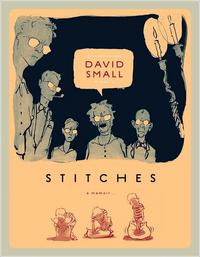
    Some of the more touching, popular, or interesting works are what I consider autopathographic comics. (Yes, I made up that word, but I like it.) Stitches: A Memoir by David Small, Mom's Cancer by Brian Fies, Cancer Vixen by Marissa Acocella Marchetto (Frankly, I can't look at this book without wincing, but lots of people love it.), Special Exits by Joyce Farmer, Our Cancer Year by Joyce Brabner, Harvey Pekar, and Frank Stack Monsters by Ken Dahl, and many more comics all provide resonant personal experiences of disease. 


    Great read!


    2. IN THE (BODY) BIZ - Sometimes those who know (through experience and/or education) want to write about their clinical experiences or create stories or gags based on their area of expertise. Trained as a doctor, Osamu Tezuka's Black Jack series is a glowing example of the fictional end of this group.


    Here's an excellent article about Black Jack from Jog- The Blog.

    More will come later about cartoonists In The Biz (nurses, doctors, et. al.), but for now go to Graphic Medicine for great resources and info on medical comics from the narrative medicine perspective. The next time they host a conference on this continent -- I'm there!

    3. EDUCATIONAL - A traditional interpretation of this group is comics that were written for the express purpose of educating its readers. Narrowly defined, this is the area where there are few successes and many boring, dry tomes of comic mediocrity. However...


    One of my favorite educational comics of all time is The Stuff Of Life: A Graphic Guide To Genetics and DNA written by Mark Schultz and drawn by Zandor Cannon and Kevin Cannon. This comic kicks gluteus

    I recently read an article from a pharmaceutical journal touting a new series of educational comics for children and young teens called Medikidz. The author of the article, one of the Medikidz creators, was promoting the series as a way to keep children with chronic illness compliant with their medication. This is a good thing but the tone of the article implied it would be good for pharmaceutical sales. Brrrr. 
    I also looked high and low for the name of the "leading graphic novel artist" these doctors have teamed up with, both in the article and on their site, but I find none. You can't get a comic without an artist. I don't know what to think of these people.

    As an educator I personally find the category "Educational" so broad as to be ridiculous. I think ALL FORMS of medical comics can also provide educational opportunity with the right guidance. 

    3. ENTERTAINMENT - Expose the body and/or mind to extreme physical and/or psychic elements that result in a physical and/or psychic reactions (usually) other than death, and voila! Volumes of fun and suspense await! Or perhaps someone has sustained some form of mutation that affects them on some profound level. Maybe they undergo surgery and become a cyborg. Perhaps a murderer exposes his/her victim to a pathogen, toxin, or other substance that will kill them - or will it? Maybe someone has been bit with radioactive spider venom, or exposed to cosmic rays, gamma radiation, or what have you.

    You get it. This category encompasses most super-hero, science fiction, and fantasy themes.


    Remember the Amazing six-armed Spider-Man? Every time I see one of those cover images, all I can do is speculate about the arrangement of 3 shoulder girdles and all their accompanying musculature on Peter Parker's torso. My anatomy students and I can spend a lot of time on this if we seriously consider muscular attachments, how to add joints to the thoracic cage, and what kind of range of motion one might get out of those two lower pairs of arms. Yes, it's a stupid mental exercise, but not a pointless one. If you are still learning about  and trying to memorize origins, insertions, and actions of the muscles of scapular stabilization it can be quite useful! We all have to start somewhere.

    (Did you notice I didn't even mention the whole radioactive spider thing? If you'd like to read about inflammation, urticaria (hives), and fibroblasts, visit The Cinematologist.)

    THERE'S A LOT MISSING!
    What about all those great medically-themed minis you can pick up at comiccons? What about Night Nurse and other medically themed comic books and strips? What about... etc., etc!!?!? I have left lots of materials, themes, artists, and writers out of this article but don't worry, they will show up in future posts. 


    1. I hope no one from my day job reads my insanely simplistic metaphor!

    Saturday, April 13, 2013

    ANATOMY FOR YOGA WORKSHOP APRIL 20-21, 2013

    STUDY ANATOMY AND ITS RELATIONSHIP TO YOGA ASANA 

    April 20-21 from 2-7:30 PM I will be teaching a musculoskeletal anatomy course at mang'Oh Yoga in Manhattan. The course is a part of mang'Oh's teacher training program, but if you contact the studio you can make arrangements to take this workshop independently! This link will take you to the page with their contact info. Mang'Oh is a great space at 322 East 39th Street in Manhattan between 1st and 2nd avenue. They also offer a variety of yoga classes throughout the week. 

    The course will introduce vocabulary and concepts of anatomy and kinesiology, survey the tissues of the musculoskeletal system, and explore the structures and movements of the skeleton and major muscles. There will also be a small unit on injury prevention. 

    As per usual, I will use anatomical images projected on a wall, drawing on the body, and occasional simple asana instruction to get us exploring the soma intellectually and physically. The class is designed to keep anatomy novices and advanced students alike engaged, learning, and entertained. Hope you can make it!


    Monday, December 10, 2012

    A RECENT ARTICLE ABOUT DRAWING

    JUST DO IT


    Sketches from the Anatomy class by Hannah Means-Shannon.

    Here's a link to an article written by Hannah Means-Shannon. A writer, academic, critic, and friend who took our Anatomy for Cartoonists Class at the Society of Illustrators this fall. She writes about her process of reconnecting to drawing. She mentions that taking drawing classes gave her some of the incentive to get back into the pencil-saddle, so to speak.