Showing posts with label Graphic medicine. Show all posts

Wednesday, December 18, 2024

 ANOTHER FANTASTIC ARTS RESIDENCY


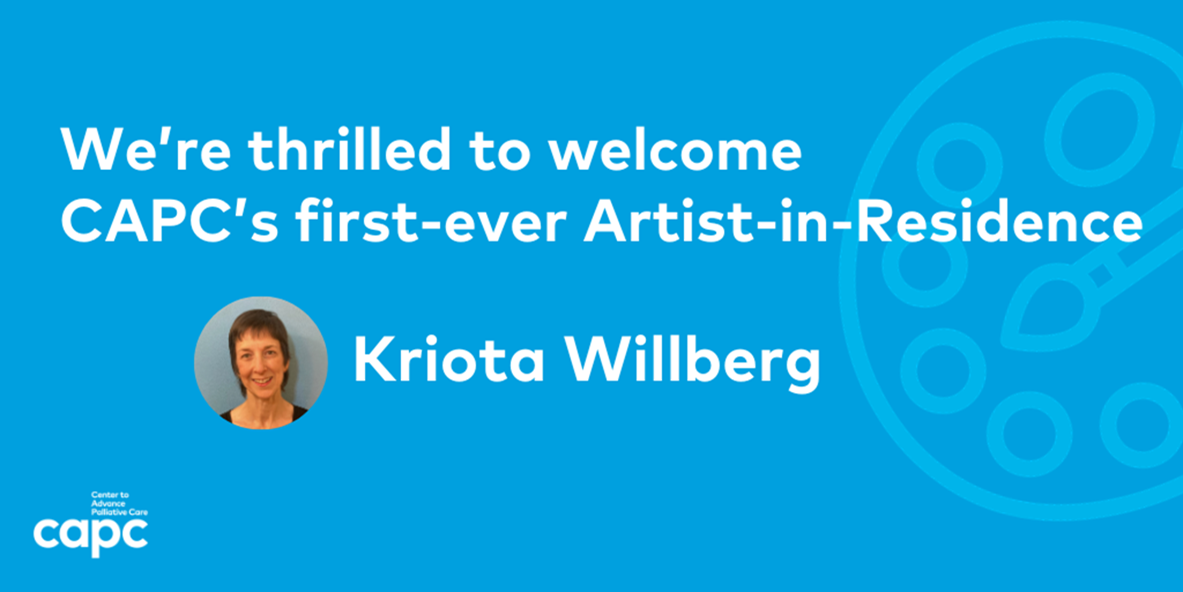
I have been working as a graphic medicine cartoonist/illustrator for the Center to Advance Palliative Care. It's part of the nonprofit Icahn School of Medicine at Mount Sinai. It has been a very gratifying experience. I also became their Artist-In-Residence last year. My residency will finish at the end of December 2024. My work with CAPC has been to illustrate their online clinical education/training. It has been a fascinating process.

Page excerpt from a CAPC educational unit.My drawing.

Page excerpt from a description of CAPC .My drawing.

Palliative Care teams work to help patients with intense, chronic, and/or terminal illnesses, to relieve or reduce their symptoms. Some people think palliative care and hospice are the same thing, but they are not. Hospice is for patients who have been diagnosed with a terminal illness and the prognosis includes a potential date of their death. But palliative physicians help both hospice and other patients. I think we can all imagine that taking care of these patients must be an intense and emotional experience for the patient, caregiver, and palliative care clinicians!

This area has supported a lot of artistic growth for me, since I am drawing patients and clinicians having all sorts of very intense conversations about illness, pain, and maybe death. What a fantastic opportunity for me!

Page excerpt from a CAPC educational unit.My drawing.

And now, I get to share with you that the CAPC Marketing and Communications team has announced that CAPC won four 2024 MarCom Awards! Here's their website description of the Web-Based Training. I'm also going to take a moment to brag and share a link that also include my name in the credits about the project. And here's a description of CAPC's blog, just to give you a more dynamic sense of their work.

If you'd like, you can Follow @CAPCpalliative on TwitterLinkedIn and Facebook 


Monday, March 11, 2024

CADAVER CHRONICLES MEMOIR SERIES

WHY WRITE A MEMOIR ABOUT MY RELATIONSHIP TO DEAD BODIES?

Excerpt from Cadaver Chronicles Episode #2 by K. Willberg. 
I'm remembering my love of anatomy related to dancing.
I teach a drawing class in a cadaver lab. This dream job inspired me to make Cadaver Chronicles, a philosophical, occasionally explicit, and sometimes poignant and funny graphic memoir about childhood, anatomy, death, dying, healthcare, art, food, and relationships.
 
For artists, healthcare workers, scientists, and scholars, the study of actual human bodies affects how we perceive the dead and gives us context for reflection on the deaths of others and ourselves. For me, every living creature has an anatomical identity. For many, anatomy is not only an area of scientific knowledge and technical specificity, it’s a lifestyle!

I've already written and drafted roughly 200 pages illustrated with comics as well as 20 years of drawings from my sketchbooks. What kind of sketchbook drawing? My sketches from the cadaver lab where I teach, figure drawings where I anatomized the live models (just for fun!), animal sketches including an anatomized kitten, comparative anatomy sketches where I turn animal skeletons into people, general sketches of bodies, some bones, and even some dancers. 


EPISODE #1

 Here's the cover of this 24 page episode. I drew it from a selfie and anatomized my face. That's my spouse, cartoonist R. Sikoryak in the background. He's been tolerating my fascination with bodies for 30 years!

This first episode starts with the book's prologue about how I was terrified of death as a child. So much so that driving by a cemetery with a friend when I was 10 terrified me. 

How could I remember that? By gazing at my sketches and following a chain of flashbacks from my trip to the Paris Catacombs at 50, through a series of events taking me back to the cemetery. 

Then Episode #1 gets into Chapter 1 of the book.

Highlights include my father getting me very interested in animals and anatomy. So much so that one day, he brought me a bullfrog from the biology department on the campus where he was a professor. We dissected it in the basement together.

Dad was so encouraging that he was totally supportive when a friend and I started hanging out a a local veterinary clinic. 

Obviously, a childhood of catching wildlife, dissecting frogs, and assisting in the medical and surgical treatment of animals began to soften and moderate my fear of death.

Here are a few pages and excerpted panels.


Interested in browsing a copy? If you live in New York or New Jersey, I'll be selling them this Saturday and Sunday, March 16-17th at MoCCA Fest  in Manhattan, sponsored by the Society of Illustrators.

A description and samples of Episode #2 will be posted next!


Saturday, February 6, 2021

GRAPHIC MEDICINE CONFAB - STUDY GUIDES!

FEBRUARY CONFAB

As you probably already know, The Graphic Medicine Confab is a roundtable conversation focusing on the challenges and techniques of making graphic medicine: comics about everything and anything to do with health, medicine, illness and our bodies. Each meeting has a theme and a facilitator and there's NO CHARGE! 

Here's info about our next 'Fab. (Not just for graphic medicine makers!)

COMICS STUDY GUIDES! WHAT ARE THEY? WHY CREATE THEM?

Comics are becoming popular classroom media for use by students from kindergarten to doctorate programs. 


Quince: The Definitive Bilingual Edition with a 
study guide by Theresa Rojas! 
Educational graphic medicine subjects include genetics, gender studies, race and racism, bioethics, patient experiences, epidemiology, violence, mental health, incarceration, and so much more. Comics about these topics can teach fact and theory, share lived experience, or provide thought-provoking narratives in a variety of formats. You might be making educational graphic medicine comics without realizing it!


Do you make comics that could be used in a classroom? If so, you might want some tips on ways to promote your work as (not just fantastically entertaining but also) educational. One way to inspire educators to use your comics in the classroom is to make study guides for your books. What is a study guide, you ask? Come to the GM Confab and find out.


Are you an educator interested in connecting with cartoonists and using more comics in the classroom? If so, you may want to share in the Confab conversation about study guides.


Wednesday, February 17 2021 at 5pm PT/8pm ET 

NO CHARGE!


Dr. Theresa Rojas joins the Graphic Medicine Confab facilitators Georgia Webber, Joel Christian Gill, Benjamin Schwartz, Kriota Willberg, and YOU, to talk all about study guides: what they are, how they are used, where to find them, how to make them, and more!


Join us to contribute ideas, ask questions, get feedback, and share resources.


Fill out this Google Form and we will send you the Zoom invite. 

The 'Fab Dr. Theresa Rojas!


Dr. Theresa Rojas is a Professor of English and Professor of Ethnic studies at Modesto Junior College, who teaches literature, creative writing, composition, and comparative media, with a speciality in post-1945 Comics Studies and Visual Culture. She is an Academic Senator and the Founding Director of the Latinx Comic Arts Festival. LCAF is the California Central Valley's international celebration of Latinx comic arts creators and friends, highlighting Latinx cartoonists, writers, animators, artists, and comic arts educators. She serves on the Executive Board of the Graphic Medicine International Collective and is developing a number of projects focusing on the intersection of Latinxs and graphic medicine. 


See you on the 17th!

Saturday, October 24, 2020

CADAVER DIARIES


WARNING! IF SKETCHED IMAGES OF DEAD AND DISSECTED HUMAN BODIES ARE DISTURBING TO YOU THEN DON'T READ THIS POST!!! I MEAN IT. - KW

ANATOMY AND CADAVERS

As you probably already know, a detailed study of human anatomy doesn't necessarily require us to partake in the dissection of cadavers. With in-depth reading materials, exceptional illustrations, incredible anatomy apps that can show you layers of anatomical structures rendered three  dimensionally, and a willing living human body at hand to practice palpation upon, you can meet educational requirements for many fitness, health science, and artistic professions.

Even so, I've had the fortune of studying anatomy in and out of cadaver labs for almost 40 years. (Wow!) My latest affiliation with an anatomy lab was last year as a co-teacher with artist Laura Ferguson in her Art And Anatomy drawing classes at NYU. She has been teaching this class for years and it is an amazing experience. For more about the class, visit the Art And Anatomy website. 

(For more about my adventures teaching graphic medicine seminars through in The Master Scholars Program in Humanistic Medicine at NYU Grossman School of Medicine, visit this blogpost.)

ANATOMY AND DEATH

Conversations last fall with Laura and with NYU faculty about anatomic, artistic, and healthcare education gave me a lot of time to think about my relationships to bodies, anatomy, art, and death over the last 40 years. I spent very fulfilling quiet time in the lab sketching and examining bodies, watching students draw, and thinking about the professional and personal growth that repeated exposure to death and dying has provoked over the course of my lifetime. 


In January started looking at my last 16 years of figure drawings and cadaver sketches. I thought about my work as a massage therapist with seriously ill and dying patients and friends. I thought about the death of my father. I thought about my new relationship to the cadavers in the lab: I was there as an artist instead of health sciences student or teacher. Wow! What a change in perspective.

Of course the inevitable happened - I made a graphic memoir about my life with cadavers, illustrated exclusively from my sketchbooks. 

ANATOMY AND LIFE

I really got into drawing faces in the lab. I started to like some of the cadavers more than others. Obviously they had no say in my perception of our relationship, but I started to think of these bodies as my friends!

Working with cadavers is a life-changing experience. My work with dead human bodies definitely influenced my massage treatments of living human bodies. It helped me process the death of my father. It changed the way I see bodies. If you're curious about any of this, then this book may be for you! If you want to know what it's like to dissect a cadaver, this book may be for you! If you are curious about different ways people emotionally cope with dissecting human bodies, this book may be for you! This book is definitely NOT for you if sketches of dissected human bodies and faces are too disturbing.

DON'T WORRY!

The identities of these living and dead bodies can't be determined through the sketches in the book. Tattoos and distinctive skin markings (other than my own) are not show. The facial features of live models are obscured and the faces of the dead models have been dissected. No one is identifiable.

If you'd like to order a copy of Cadaver Diaries, take this link to Birdcage Bottom Books.


Saturday, June 6, 2020

GRAPHIC MEDICINE CONFAB THIS SUMMER!

THESE ARE GRAPHIC MEDICINE TIMES

Kriota Willberg
Right now, almost every aspect of our lives has been impacted by two major cultural/medical phenomena: pandemic and violence. COVID-19 and the murder of George Floyd is shaping our values, our behaviors, and our body/mind/spirits. 

This implies that practically any comics that you make these days could qualify as graphic medicine: comics about everything and anything to do with health, medicine, illness and our bodies.

Whether your interest is in protecting people from COVID-19, fighting racism, or just blowing off some tension by making gag cartoons about herpes, creating graphic medicine presents a range of challenges like - making arguments that will inspire people to make healthier choices; communicating intense subjective states like pain, grief, or fear; using humor to explore sensitive subjects; educating readers without being boring; or mastering techniques for drawing the perfect word balloon.

Are you making comics about graphic medicine? Looking for answers to tricky comics problems? Want to share your skills and knowledge? Have nothing to do on Tuesday evenings? 

JOIN THE GRAPHIC MEDICINE CONFAB! - IT'S FREE!!
Joel Christian Gill

The Graphic Medicine Confab is a roundtable conversation focusing on the challenges and techniques of making graphic medicine: comics about everything and anything to do with health, medicine, illness and our bodies. 

There's no charge.

Each meeting has a theme and a facilitator.

The GMC will meet four times this summer via Zoom, Tuesday evenings from 7-7:45 PM (ET).

June 16, Kriota Willberg – How can we make dangerous information less threatening? 
June 30, Joel Christian Gill –  Emotion and style in comics
July 14, Georgia Webber – Collaborating across access needs
July 28, Ben Schwartz – Humor, Comics, and Medicine

Join us to contribute ideas, ask questions, get feedback, and share resources.

Fill out this Google Form and we will send you the Zoom invite to each meet.

WHO ARE WE?
Georgia Webber

Joel Christian Gill™  is the chairman, CEO, president, director of development, majority and minority stock holder, manager, co-manager, regional manager, assistant to the regional manager, receptionist, senior black correspondent and janitor of Strange Fruit Comics. He is the author/illustrator of 2 books from Fulcrum Publishing Strange Fruit vol I Uncelebrated Narratives from Black History May 2014 and Tales of the Talented Tenth Fall 2014. In his spare time he is the Chair of Foundations at the New Hampshire Institute of Art and  member of The Boston Comics Roundtable.  He received his MFA from Boston University and a BA from Roanoke College. His latest work is a memoir chronicling how children deal with abuse and trauma: Fights: One Boy's Triumph Over Violence (Oni Press January 2020.) 

Georgia Webber is a comics artist, writer, and editor entirely occupied by the intersection of health and art, making music, comics, and facilitating health workshops.  Georgia is best known for her debut graphic memoir, Dumb: Living Without a Voice (Fantagraphics 2018), the chronicle of her severe vocal injury and sustained vocal condition which causes her pain from using her voice. This difficult experience lead her to work as a Cranial Sacral Therapist, a meditation facilitator, and as an improvising musician. She has extended her love of the voice into the community with a project called MAW Vocal Arts. MAW hosts a vocal arts showcase event and online practice sessions called Breathing. Georgia’s latest book is a collaboration with Vivian Chong, Dancing After TEN (Fantagraphics 2020).
Ben Schwartz

Ben Schwartz,  MD is a staff cartoonist for the New Yorker and an assistant professor of medicine (in surgery) at Columbia University’s Vagelos College of Physicians and Surgeons. After graduating from medical school at Columbia University and completing an internship in internal medicine, Schwartz decided to take the leap to becoming a full-time cartoonist. Though he no longer practices as a doctor, Schwartz has taken on multiple roles at Columbia, where he teaches comic storytelling in the school’s Narrative Medicine program, serves as Chief Creative Officer for the Department of Surgery, and provides communication strategy to various groups throughout the medical center. 

Kriota Willberg makes comics about the body sciences, medical history, and bioethics. Her book, Draw Stronger: Self-Care for Cartoonists and Visual Artists, is published by Uncivilized Books. Other comics have appeared in: 4PANEL.ca,Spiral Bound (Medium.com)SubCultures, Comics For Choice, The Graphic Canon, Intima: Journal of Narrative Medicine, and Strumpet 5, among others. Willberg writes a self-care column for the Comics Beat called Get A Grip!. Her comic Silver Wire was nominated for a 2019 Ignatz Award. She teaches graphic medicine and drawing in the Department of Humanistic Medicine at NYU. 

Hope to see you soon!

Sunday, July 7, 2019

SILVER WIRE BIBLIOGRAPHY FOR SPIRAL BOUND READERS

Guy deChauliac gave detailed instructions on suturing techniques
in his Major Surgery (1363). I wonder if Guy had heard of or tasted bananas .
Hello! This blog post is for those of you interested the research involved in writing and drawing Silver Wire, an illustrated story of sutures and sewing, which you can find online at Spiral Bound

Because Silver Wireexplores some very sensitive topics like research ethics and the medical histories of enslaved people, women, and the “fathers” of medicine, I think it’s important to show my some of the research for the text and visual references that went into the drawing and images. 

In the comic, I list pages and panel numbers with citations and a bibliography. But here, you’re only getting the bibliography. Why? Because they are both so friggin’ long! It is likely you will give up from exhaustion before getting half way through the bibliography! The citations list includes wry commentary and references to artists and other thinkers who influenced the work. If you are a glutton for research (or punishment), you can buy the minicomic. The comic also has images of some of my medically themed embroidery, and I’ve included some of them here along with select panels from the comic. Pictures make everything better!
A diagram of venous ligatures from 
Bernard and Huette. Printed
on fabric and worked up with

darning stitch used in Blackwork
embroidery. Plus some cross stitch.

If you just want to know where you can find information and images about the history of medicine, and don’t care that much about a list of books or references, try the following sites -- 

Many of the books and images used in the research for making Silver Wire can be found through the New York Academy of Medicine Library Historical Collection from their online collections and at their reading room. Browse their database and make an appointment - they are open to the public! 

The National Library of Medicine Digital Collection is a wondrous site! 

Archive.org is an excellent resource for pdfs of historical surgical texts, not to mention documentation of practically everything in all media.

I find the Wellcome Collection image search is a little difficult to maneuver through, but persistence will pay off! 


Bibliography
Annan & Sons, T.R. Joseph Lister, Baron Lister. Wellcome Collection, Glasgow.
Ashenden. Diorama of Listerian Operation . Image via Wellcome Collection.
Bauer and Black.Ligatures and sutures. Chicago: Bauer and Black, 1924?
Bell, Charles 1774-1842. Illustrations of the great operations of surgery : trepan, hernia, amputation, aneurism, and lithotomy. London: Longman, 1821.
Bell, John (1763-1820). The Principles of Surgery. Edinburgh: Printed for T. Cadell, and W. Davies, in the Strand, T.N. Longman & O. Rees, Paternoster Row, London; and W. Creech, P. Hill, and Manners and Miller, 1801-08.
Bell, John. Discourses on the nature and cure of wounds. I. Of generals. Of procuring adhesion. Of wounded arteries. Of gunshot wounds. Of the medical treatment of wounds. II. Of particulars. Of wounds of the breast. Of wounds of the belly. Of wounds of the head. Of wounds of the throat. III. Of dangerous wounds of the limbs. Of the question of amputation ... . Edinburgh: Bell and Bradfute, 1795.
Bernard, Claude, et al. Illustrated manual of operative surgery and surgical anatomy / by Ch. Bernard and Ch. Huette ; edited, with notes and additions, and adapted to the use of the American medical student, by W. H. Van Buren and C. E. Isaacs ; illustrated ... by M.J. Lévillé. New York: H. Balliere, 1855.
In 1626 Adriaan van Spiegel and Giulio Casseri (posthumously) published a book
on fetal development, depicting images of pregnant women standing in nature, their genitals discreetly masked by foliage. Their abdomens and uterine walls are peeled back like flower petals. I used silk, antique lace, bad-, darning-, and satin stitches on this women-are-flowers theme.
Bliquez, Lawrence J. and Ralph Jackson. Roman surgical instruments and other minor objects in the National Archaeological Museum of Naples: with a catalogue of the surgical instruments in the "Antiquarium" at Pompeii. Verlag Philipp von Zabern, 1994.
Board, Ernest. Robert Liston Operating. Wellcome Library, London.
Bock, Carle Ernst, 1809-1874. Atlas of human anatomy : with explanatory text . Wellcome Collection Images: https://wellcome collection.org/works/yu9nrqxq , n.d.
Boyer, Paul S. and Clifford E. Junior Clark. “Textbook Site for: The Enduring Vision, Fifth Edition, Technology and cultrue: Chaper 18.” n.d. Cengage Learning.2018  23-July. <http://college.cengage.com/ history/us/boyer/enduring_vision/ 5e/students/techcult/ch18.html>.
Breastcancer.org.Mastectomy: What to expect. 2018 йил 21-February. 2018 11-June. <http://www.breastcancer.org/treatment/surgery/mastectomy/expectations>.
Brunshcwig, Hieronymus (ca. 1450-ca. 1512). Liber de arte distillandi de compositis. Strassburg: Johann Gruninger, 1512.
Burch, Jon M., et al. “Single-Layer Continuous Versus Two-Layer Interrupted Intestinal Anastomosis A Prospective Randomized Trial.” Annals of Surgery231.6 (2000): 832-837.
Chartran, Théobald. Ambroise Paré using a ligature on an artery of an amputated leg of a soldier, during the Siege of Metz, 1553. Wellcome Collection.
Cheselden, William (1688-1752). Osteographia, or The anatomy of the bones. London: William Bowyer, 1733.
Colton, Virginia (ed.). Reader's Digest Complete Guide to Needlework. Pleasantville, New York/Montreal: Reader's Digest, 1979.
deBeche-Adams, Teresa H. and Jaime L. Bohl. “Rectovaginal Fisturals.” Clinics in Colon and Rectal Surgery23.2 (2010): 99-103.
Ethicon. "Ethicon Wound Closure Manual." 2005. Penn Medicine.Johnson and Johnson. 8 January 2019. <http://www.uphs.upenn.edu/surgery/Education/facilities/measey/Wound_Closure_Manual.pdf>.
Fandre, A. Le catgut, les ligatures et les sutures chirurgicales à travers les âges, préface du professeur Louis Bruntz ...Paris: Masson et cie, 1944.
Galen. Method of Medicine, Books 5-9. Ed. Ian Johnston and G.H.R. Horsley. Trans. Ian Johnston and G.H.R. Horsley. Cambridge: Harvard University Press, 2011.
I didn't plan on returning to Galen as often as I did during my residency but the guy
is magnetic. What a showman! 
Gilbert, C. Galen treating wounded gladiator in coliseum of Pergamon, 2nd century. Getty Images. Know Yourself, Notions of physology to youth and educated people by Louis Figuier. 1883.
Guy, de Chauliac and E. Nicaise. The Major Surgery of Guy de Chauliac. Trans. Leonard D. Rosenman. Xlibris corporation, 1363, 1890, 2005.
Guy, de Chauliac and Leonard D. Rosenman. The major surgery of Guy de Chauliac : An English Translation. Ed. Translation of Nicaise. Trans. Edouard Nicaise and Leonard D. Rosenman. Philadelphia: Xlibris Corporation, 2007.
Heath, William, 1795-1840. Wellington and Peel in the roles of the body-snatchers Burke and Hare suffocating Mrs Docherty for sale to Dr. Knox; representing the extinguishing by Wellington and Peel of the Constitution of 1688 by Catholic Emancipation.Wellcome Collection.
Hinckley, Robert Cutler. Robert Cutler Hinckley - “Ether Day, or The First Operation with Ether” - Wikipedia.org. n.d. 5 October 2018.
Hunt, Tony and Frugardo, 12th cent. Ruggero. The medieval surgery / [commentary on the illustrations by] Tony Hunt. Woodbridge: Boydell Press, 1992.
Johnson and Johnson, Inc. Lister and the ligature, a landmark in the history of modern surgery, compiled by the research readers of the Scientific Department. New Brunswick: Johnson & Johnson, 1925.
Li, Guo-Cai, et al. “Single‑layer continuous suture contributes to the reduction of surgical complications in digestive tract anastomosis involving special anatomical locations.” Molecular and Clinical Oncology2 (2014): 159-164.
Mackenzie, David. The History of Sutures. Paper. The Scottish Society of the History of Medicine. Edinburgh: The Scottish Society of the History of Medicine, 1971.
Madden, John L.Technical Considerations in Gastrointestinal Surgery. Somerville: Ethicon, 1973.
Manigaud, C. Ambroise Paré (1517-1590). Wellcome Collection: Images.
Mattern, Susan P. The Prince of Medicine: Galen in the Roman Empire. Oxford: Oxford University Press, 2013.
An oophorectomy is the surgical removal of an ovary. This uterus, worked up in yarn on a thrift store doily, is stitched with the same darning  stitches as the Bernard  and Huette arm, above. I pulled and yanked on the yarn where the right ovary should be, to resemble the tugging of scar tissue.
Medford, Samuel. Father, Mother, and Boy. Smithsonian American Art Museum.
Milne, John Stewart. Surgical Instruments in Greek and Roman Times. Oxford: Clarendon Press, 1907.
Nicaise, E. The major surgery of Guy de Chauliac : surgeon and master in medicine of the University of Montpelier : written in 1363, here re-edited and collated from Latin and French editions and complemented with illustrations, supplemented with notes and an historical introduction about the Middle Ages and the life and the works of Guy de Chauliac. Trans. Leonard D. Rosenman. Philadelphia: Xlibris Corporation, 2007.
NIH: US National Library of Medicine. Cesarean Section - A Brief History: Part 1 - Cesarean section performed on a living woman by a female practitioner. Miniature from a fourteenth-century "Historie Ancienne.". 27 April 1998. January 2019. <https://www.nlm.nih.gov/exhibition/cesarean/part1.html>.
Ogden, Margaret S. The cyrurgie of Guy de Chauliac. London, New York: Society by the Oxford University Press, 1971.
Ojanuga, Durrenda. “The medical ethics of the 'Father of Gynaecology', Dr J Marion Sims.” Journal of medical ethics19 (1993): 28-31.
Paré, Ambroise (1510-1590) and Francis R. (1870-1950) Packard. Life and times of Ambroise Paré <1510-1590> with a new translation of his Apology and an account of his journeys in divers places, by Francis R. Packard ... with twenty-two text illustrations, twenty-seven full page plates and two folded maps of Paris of the 16th and 17th centuries. . New York: P.B. Hoeber, 1921.
Paré, Ambroise.Dix livres de la chirurgie : avec le magasin des instrumens necessaires à icelle / par Ambroise Paré. (1510?-1590). Paris: Cercle du Livre Précieux, 1564.
—. Ten Books of Surgery with The Magazine of Instruments Necessary for It Translated by Robert White Linker and Nathan Womack. Trans. Robert White Linker and Nathan Womack. Athens: University of Georgia Press, 1969.
—. The Workes of that famous Chirurgion Ambrose Parey Translated out of Latine and compared with the French.Trans. Th: Johnson. London: Th:Cotes and R. Young, 1634.
Parker, Rozsika. The Subversive Stitch: Embroidery and the Making of the Feminine. London: Women's Press, 1984.
This is a representation of historical research subjects.
The pig is making a sarcastic statement.
Planella Coromina, Josep or Jose (1804-90). "Galen assisting a gladiator, wounded in the circus of Bergamo." n.d. bridgemanimages.com.14 October 2018.
Porter, Roy. The Greatest Benefit to Mankind: A Medical History of Humanity. New York: W. W. Norton, 1997.
Queen Victoria visiting the Royal Infirmary, Edinurgh. Wellcome Collection. The Illustrated London News and Sketch Ltd.London, England, 1842.
Richardson, Ruth. Death, Dissection and the Destitute. London: Penguin, 1988.
Rose, H.F. Galen, standing in a glade, looks at a human skeleton on the ground. Wellcome Collection.
Ruysch, Frederik (1638-1731). Opera omnia anatomico-medico-chirurgica : huc usque edita. Quorum elenchus pagina sequenti exhibetur, cum figuris aeneis. . Amsterdam: Apud Janssonio-Waesbergios, 1702-1731.
Salazar, Christine F. The Treatment of War Wounds in Graeco-Roman Antiquity. Boston: Brill, 2000.
Savage, Henry. The surgery, surgical pathology and surgical anatomy of the female pelvic organs : in a series of coloured plates taken from nature, with commentaries, notes and cases . 3d. Philadelphia: LInday and Blakiston, 1876.
Sims, J. Marion 1813-1883. On the treatment of vesico-vaginal fistula. Philadelphia: Blanchard & Lea, 1853.
—. Silver Sutures in Surgery. New York: Wood, 1858.
This is a lace curtain worked over in wool, linen,
and cotton floss. The image is from a gynecological
surgery book by Henry Savage, demonstrating the
Sims Position for gynecological surgeries.
The floral pattern on thecurtain looked amazingly like a uterus.
Sims, J. Marion. The Story of My Life. New York: Da Cap Press, 1968.
Smellie, William. An abridgement of the practice of midwifery: and a set of anatomical tables with explanations. Collected from the works of the celebrated, W. Smellie, M.D.  . Boston: J. Norman, 1786.
Spiegel, Adriaan van (1578-1625) and Giulio (ca. 1552-1616) Casseri. De formato foetu liber singularis. Padua: Io. Bap. de Martinis and Livius Pasquatus, 1626.
Stamatakos, Michael, et al. “Vesicovaginal Fistula: Diagnosis and Management.” The Indian Journal of Surgery76.2 (2012): 131-136. 2018 йил 2-July. <https://www.ncbi.nlm.nih.gov/pmc/articles/
           PMC4039689/>.
Thom, Robert. Sims with Anarcha. Southern Illinois University School of Medicine, Pearson Museum.
Unknown. "Harriet Tubman." n.d. Wikipedia.5 October 2018. <https://en.wikipedia.org/wiki/
          Harriet_Tubman>.
Van Gogh, Vincent. Female Nude, Back View
           Accessed via Wikimedia Commons, 9/21/18. Reprography from art book. Paris, 1887.
Vauguion, de La. A compleat body of chirurgical operations : containing the whole practice of surgery ... Faithfully done into English.London: Henry Bonwick, T. Goodwin, M Wotton, B. Took, and S. Manship, 1699.
Wall, LL. “The medical ethics of Dr. J Marion Sims: as fresh look at the historical record.”Journal of Medical Ethics32 (2006): 346-350.
Whaley, Leigh Ann. Women and the practice of medical care in early modern Europe, 1400-1800. Houndmills, Basingstoke, Hampshire ; New York: Palgrave Macmillan, 2011.
Wikimedia Commons File: John Bell from MPG.jpg. circa 1801. <https://commons.wikimedia.org/wiki/File:John_Bell_from_NPG.jpg>.
Ziegler, Paul F. Textbook On Sutures. 2nd Edition. Chicago: The Kendall Company, 1942.

Three Cheers for You! I can’t believe you made it through this thing!
GRAPHIC MEDICINE AT THE NYU SCHOOL OF MEDICINE

The cover of the mini comic.
How many organs/structures can you identify?

Last fall (2018) I taught a Graphic Medicine course for the NYU School of Medicine's Master Scholars Program in Humanistic Medicine. It was a wonderful experience. I got paid to talk about comics to medical students and hospital staff! 

We read as many genres and artists as I could cram in to a six seminar series. Julia Wertz, Roz Chast, Grant Morrison, Caroline Pequita, Osama Tezuka, Bishakh Som, Iasmin Oma Ata, and oh-so-many-more cartoonists gave us plenty to consider and discuss.

We analyzed the  medical clinical encounter from the perspectives of patients, doctors, caregivers, and more. We explored issues like paternalism, miscommunication in medicine, professional burn out, gender identity, women's health... the list goes on. 

At the end of each class EVERYONE drew. It was fascinating to watch these talented doctors, students, researchers, and nurses, ponder my in-class assignments and create lively, funny, and touching comics in literally minutes!

We drew symptoms, wrote comic strips about personal clinical and academic encounters, designed cute organ mascots, and illustrated popular sayings about health and medicine. "Cute" is not an aesthetic that is usually explored in medical contexts. Illustrating and making (even silly) comics about medicine is a really interesting method for appreciating multiple pathways of communication. Plus it breaks up the intensity of creating uncomfortable narratives.

At the end of the course, we assembled the work into a mini comic. You can see some examples on the Lit Med Magazine site and check out their literature, arts, and medicine database.